Squat Stitch: The Squashed Cross Stitch
This article is part of a series on Advanced and Specialty Stitches. Check the main article for a full list of stitches. This one is just about the squat stitch.
What it looks like in patterns
These don’t come up super often, but on rare occasions you might see a pattern call for a different kind of stitch. You might see two rectangles taking up the space of a normal stitch.
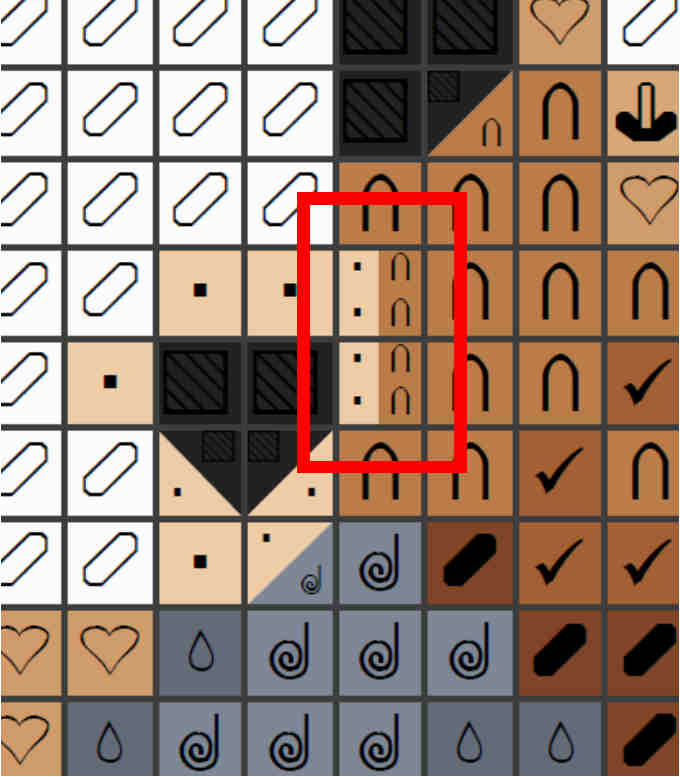
They’re rare enough I don’t have a good example for you, really. But here’s a screenshot taken from a reddit post asking about just such a stitch. They don’t even mention what pattern it is from.
The comments even debate if they should just be quarter stitches. But you can see actual quarter stitch pictured just to the left of the highlighted square, so maybe not. Either way, this is very similar to how squat stitches show up in patterns.
How to make a squat stitch
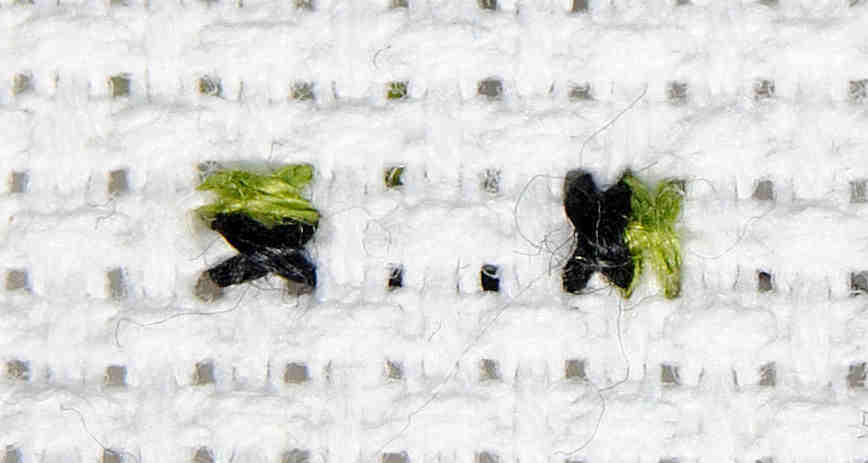
In the event you ever come across this yourself, you could just do them all as 1/4 stitches as suggested in the comments. But another method is to make a squat or ‘squashed’ stitch as shown below:
As with most specialty stitches this is easier done when stitching over two. But in my example here on aida I’ve simply pierced the space between the stitches with a sharp needle. This allows you to make long squashed stitches in a single square. Squat stitches are the same as a normal cross stitch, except you’re distorting it to fit two side by side in a single square.
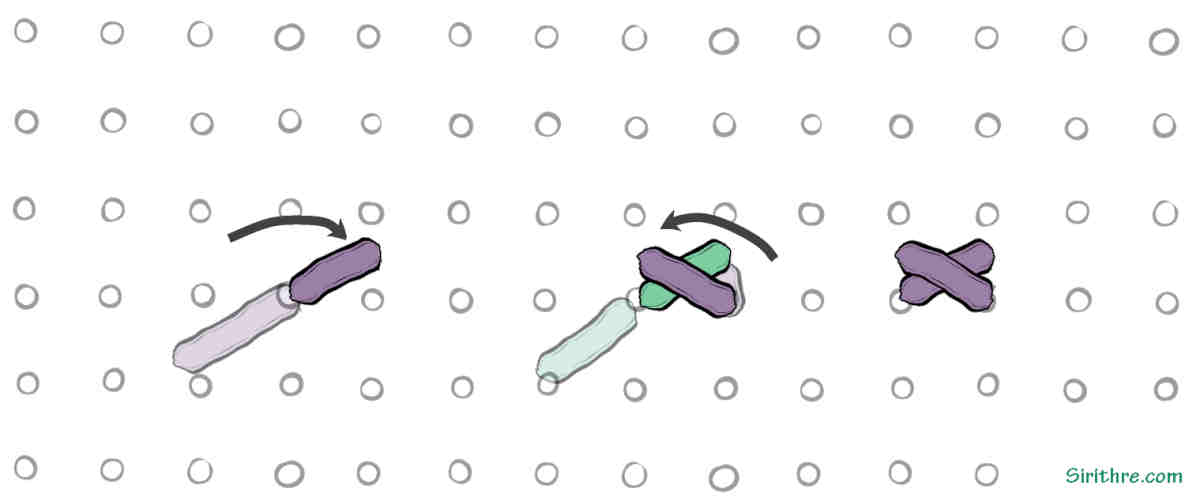
Try not to overcomplicate things here. It literally is just a long cross stitch. It’s pictured here with the top leg facing one direction, but if you normally stitch in the other direction I’d recommend making it match the rest of your stitches.
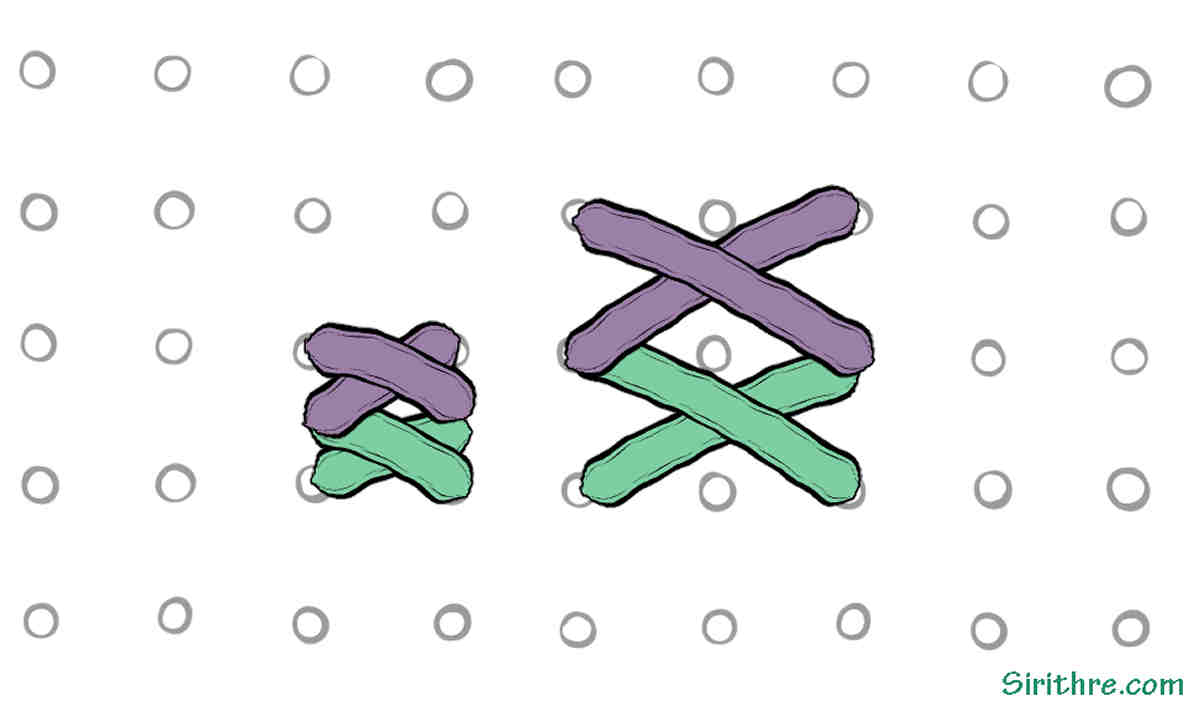
Above you can see how it looks stitched over one vs over two.